

Best Chainsaw Techniques to Improve Cutting Efficiency
At Southbrook Safety & Consulting Ltd., chainsaw operation is approached with a focus on measurable skill development, practical risk management, and long-term performance improvement. Cutting efficiency is not simply about speed. It involves proper technique, mechanical understanding, and consistent hazard awareness.
Workers who complete structured chainsaw certification programs typically demonstrate:
- Better throttle control
- Improved body positioning
- Reduced fatigue during long tasks
- Lower equipment wear and tear
- Greater confidence in high-risk cutting situations
Combining formal chainsaw safety training with real-world application ensures productivity and safety develop together rather than independently.
Why Cutting Efficiency Matters in Chainsaw Operations
Chainsaw efficiency influences more than project timelines. Poor cutting technique can lead to:
- Increased fuel consumption
- Premature chain dulling
- Guide bar damage
- Operator fatigue
- Higher kickback risk
Efficient cutting means allowing the chain to work at optimal speed without forcing pressure. Workers who complete recognized chainsaw certification courses learn how controlled movements and proper mechanical understanding improve both speed and safety.
When technique improves, operators notice:
- Smoother cuts
- Fewer stalled chains
- Reduced need for corrective trimming
- Better overall workflow consistency
Core Principles of Efficient Chainsaw Operation
1. Maintain Proper Body Positioning
Proper stance supports both safety and performance. Operators should:
- Stand with feet shoulder-width apart
- Keep knees slightly bent for stability
- Maintain balanced weight distribution
- Keep the saw close to the torso
- Avoid overreaching or twisting
Correct positioning reduces muscle strain and allows for controlled, steady cutting. Structured chainsaw safety training reinforces these fundamentals through repeated supervised practice, ensuring they become habitual rather than situational.
2. Use Correct Cutting Angles
Efficient cutting requires proper alignment between the guide bar and the wood surface. Operators should:
- Keep the bar straight within the cut
- Avoid prying or twisting mid-cut
- Let the chain pull naturally through wood
- Adjust approach based on grain direction
Applying excessive downward force reduces chain efficiency and increases wear. A professional chainsaw course teaches operators how to read wood tension and compression zones to avoid binding and unnecessary friction.
3. Control Throttle and Chain Speed
Throttle management directly impacts efficiency. Best practices include:
- Using full throttle during active cutting
- Avoiding revving when not engaged in wood
- Maintaining steady pressure throughout the cut
- Engaging chain brake when repositioning
Formal chainsaw certification programs emphasize that controlled throttle use reduces kickback risk and mechanical strain. Smooth engine transitions improve both fuel efficiency and cut quality.
Pre-Cutting Inspection Checklist
A chainsaw cannot perform efficiently without proper maintenance. Before starting work, operators should verify:
- Chain tension is properly adjusted
- Chain teeth are sharp and evenly aligned
- Guide bar is free of warping
- Chain brake engages correctly
- Fuel and bar oil levels are adequate
- Air filter is clean
Routine inspection procedures are reinforced during chainsaw certification courses to promote preventive maintenance habits.
| Inspection Area | What to Check | Impact on Efficiency |
| Chain tension | Proper tightness | Prevents derailment |
| Chain sharpness | Even cutting teeth | Faster cutting |
| Guide bar | Straight alignment | Clean cut lines |
| Chain brake | Functional | Safe repositioning |
| Fuel and oil | Sufficient levels | Prevents overheating |
Techniques for Bucking Logs Efficiently
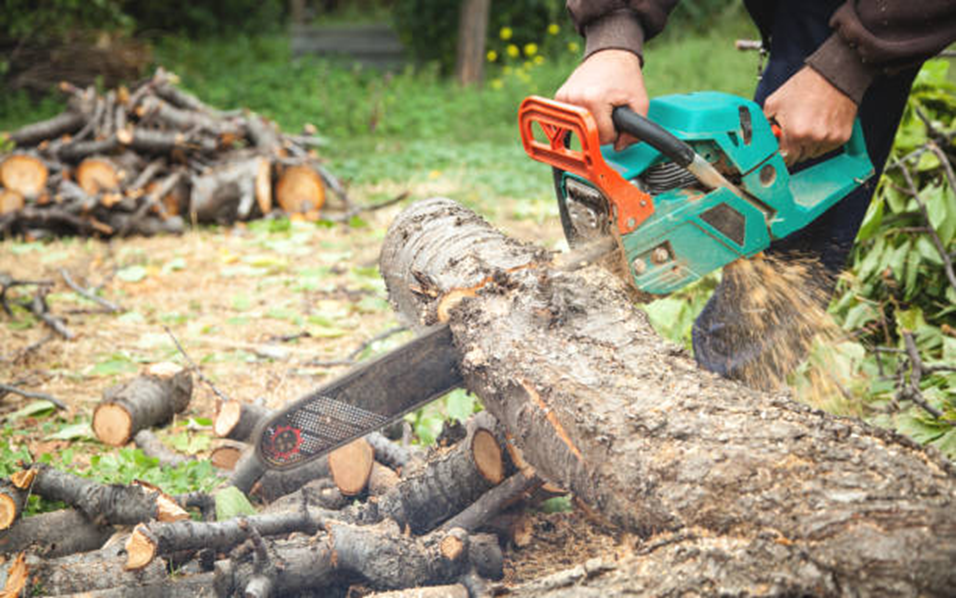
Bucking efficiency depends on evaluating how a log is supported and where internal pressure exists.
Before cutting, operators should:
- Identify compression zones
- Identify tension zones
- Clear stable footing
- Plan cut sequence
Efficient bucking technique includes:
- Making a relief cut on the compression side
- Completing the cut from the tension side
- Avoiding standing directly behind the saw
A structured chainsaw course trains operators to anticipate bar pinching and adjust technique accordingly, reducing delays and improving consistency.
Safe and Efficient Limbing Methods
Limbing requires rhythm and sequencing. Operators can improve efficiency by:
- Working from the base toward the top
- Keeping the trunk between themselves and the saw
- Standing on the uphill side on slopes
- Cutting branches in logical progression
This approach minimizes repositioning and reduces fatigue. Through formal chainsaw safety training, workers learn to combine movement planning with hazard awareness for consistent productivity.
Managing Kickback While Maintaining Productivity
Kickback remains one of the most significant operational hazards. It typically occurs when:
- The guide bar tip contacts solid material
- The chain is dull or improperly tensioned
- The operator loses balanced grip
Preventive measures include:
- Avoiding tip contact
- Maintaining two-handed grip
- Keeping chain sharp
- Using chain brake when stepping
Many individuals searching for a chainsaw certification course near me seek confidence in handling kickback risks. Supervised instruction helps build muscle memory and response timing without sacrificing efficiency.
Tree Felling Efficiency Fundamentals
Tree felling combines preparation and technical precision. Efficient felling involves:
- Assessing tree lean and wind direction
- Identifying nearby hazards
- Establishing two clear escape routes
- Cutting a precise directional notch
- Completing a controlled back cut
Participants in recognized chainsaw certification programs practice these techniques in controlled environments before applying them independently.
Efficient planning reduces:
- Need for corrective cuts
- Risk of unpredictable fall direction
- Equipment strain
- Operator fatigue
Equipment Maintenance for Sustained Efficiency
Long-term efficiency depends on consistent maintenance habits. Operators should:
- Sharpen chain regularly
- Clean debris from cooling fins
- Inspect spark plug condition
- Check guide bar wear
- Verify proper lubrication
Maintenance education is included in professional chainsaw certification courses to ensure operators understand the direct connection between equipment care and performance outcomes.
Well-maintained equipment results in:
- Faster cutting times
- Reduced vibration
- Lower fuel consumption
- Extended tool lifespan
The Role of Formal Training in Skill Development
Experience alone does not guarantee efficient technique. Structured chainsaw safety training ensures operators build skills in a systematic manner.
Training programs typically include:
- Instructor-led demonstrations
- Supervised cutting practice
- Scenario-based hazard discussions
- Competency evaluations
Workers who complete a recognized chainsaw course demonstrate improved cutting accuracy and better energy management. For additional educational resources, visit the chainsaw safety training section.
Common Mistakes That Reduce Cutting Efficiency
Even experienced operators may develop inefficient habits. Common mistakes include:
- Forcing the saw through dense wood
- Ignoring chain sharpening schedules
- Skipping pre-use inspections
- Cutting without evaluating wood tension
- Standing in unstable positions
Correcting these issues through structured chainsaw certification often produces immediate performance improvements.
When to Consider Advanced Certification
Advanced or refresher training may be appropriate when:
- Transitioning to larger timber
- Adopting new saw models
- Experiencing frequent chain binding
- Returning after extended inactivity
- Supervising less experienced workers
Individuals searching for a chainsaw certification course near me often seek skill refinement or updated safety knowledge. Reviewing structured chainsaw certification courses helps identify appropriate training levels.
Building Efficient and Responsible Chainsaw Operators
Cutting efficiency is achieved through structured learning, correct technique, and consistent equipment maintenance. Operators who complete formal chainsaw certification programs develop a balance between productivity and hazard control.
At Southbrook Safety & Consulting Ltd., training programs are structured to support real-world forestry and industrial environments. For scheduling information or program details, visit the contact us page to connect with a training coordinator and strengthen both safety and operational efficiency.
Frequently Asked Questions
1. What improves chainsaw cutting efficiency the most?
The most impactful improvements come from:
- Proper stance and grip
- Sharp chain maintenance
- Controlled throttle use
- Wood tension assessment
- Structured chainsaw safety training
2. Is chainsaw certification required for efficient cutting?
While certification focuses on safety, it significantly improves cutting precision and mechanical understanding.
3. How often should a chain be sharpened?
Sharpening frequency depends on usage intensity and wood type. Operators trained in a professional chainsaw course learn to recognize early signs of dullness.
4. Where can I find a chainsaw certification course near me?
Recognized providers offer structured chainsaw certification courses combining classroom and hands-on evaluation.
5. Does certification include tree felling techniques?
Yes. Comprehensive programs include directional notch cutting, hinge wood management, and escape route planning.