
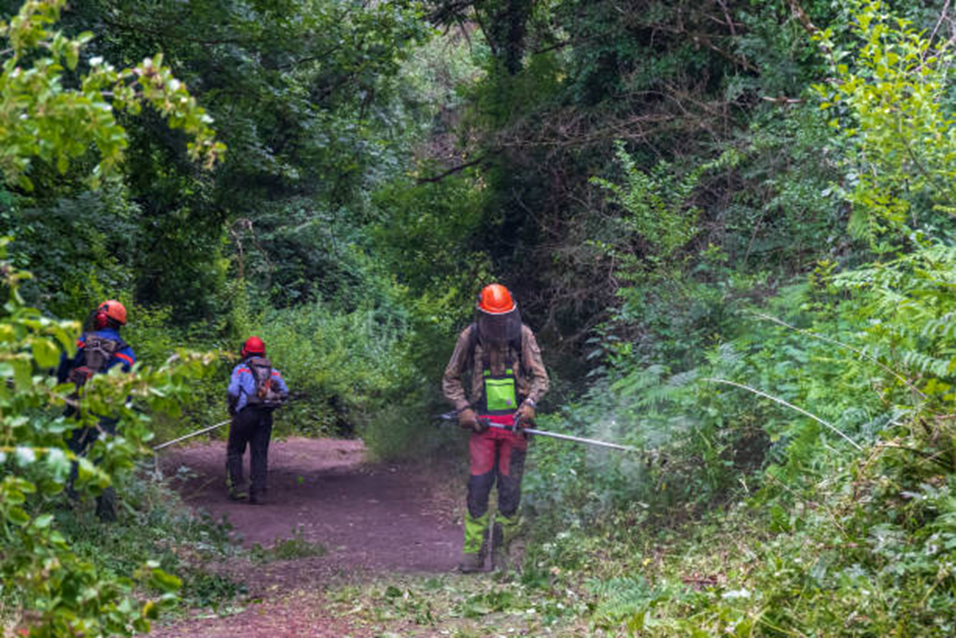
Why Brush Saw Certification Is Essential for Forestry and Land Clearing Workers
At Southbrook Safety & Consulting Ltd., workplace safety is treated as a structured, evidence-based process built around real-world field risks. Forestry and land clearing operations involve remote environments, heavy vegetation, uneven terrain, powered cutting equipment, and physically demanding tasks. These conditions require workers to make quick decisions while maintaining strict control over equipment capable of causing serious injury.
Without proper preparation and standardized instruction, brush saw operation can expose workers to avoidable hazards. That is why comprehensive brush saw safety training and documented brush saw safety certifications are critical components of a responsible safety management system. Certification ensures workers understand equipment mechanics, hazard recognition, safe cutting angles, crew spacing requirements, emergency response procedures, and personal protective equipment standards. This structured approach improves consistency across teams and reduces variability in safety practices between operators.
Understanding Brush Saws in Forestry and Land Clearing
Brush saws, commonly referred to as clearing saws, are motorized handheld tools designed to cut thick brush, dense grass, small trees, and saplings. They are widely used in forestry thinning projects, right-of-way maintenance, land development preparation, environmental restoration, and municipal vegetation management. Their portability allows crews to access tight or uneven areas where larger equipment cannot operate efficiently.
However, portability also increases responsibility. Operators must manually control throttle pressure, blade direction, body positioning, and terrain awareness at all times. Hidden rocks, stumps, and debris can cause sudden kickback or blade deflection. Weather conditions such as rain or heat can further affect footing and fatigue levels.
Structured clearing saw operator training addresses these variables by teaching workers how to conduct pre-use inspections, evaluate terrain stability, identify potential hazards, and apply safe cutting patterns. These programs emphasize proactive hazard management rather than reactive correction.
For detailed certification standards, review professional brush saw safety certifications designed for vegetation management teams.
Why Brush Saw Certification Is Necessary
Legal and Regulatory Responsibility
Employers are responsible for ensuring workers are competent before operating powered equipment. Brush saws are classified as hazardous tools due to high blade speeds and cutting force. Documented brush saw safety training demonstrates that operators have completed structured instruction and passed practical evaluation requirements.
Certification provides defensible documentation in the event of audits, inspections, or incident investigations. Without proper training records, organizations may face compliance penalties, insurance challenges, or project delays. Establishing standardized certification requirements supports a proactive safety culture and demonstrates due diligence in workforce preparation.
Risk Reduction in High-Hazard Environments
Forestry and land clearing worksites present unpredictable variables. Terrain may include steep slopes, loose soil, fallen timber, and concealed obstacles. Workers frequently operate in remote areas where emergency response times may be extended.
Comprehensive chainsaw and brush saw safety instruction reduces risk by establishing consistent safe work procedures. Training standardizes body positioning, blade engagement methods, hazard communication practices, and shutdown protocols. When crews follow uniform procedures, overall operational risk decreases and teamwork improves.
Core Components of Clearing Saw Courses
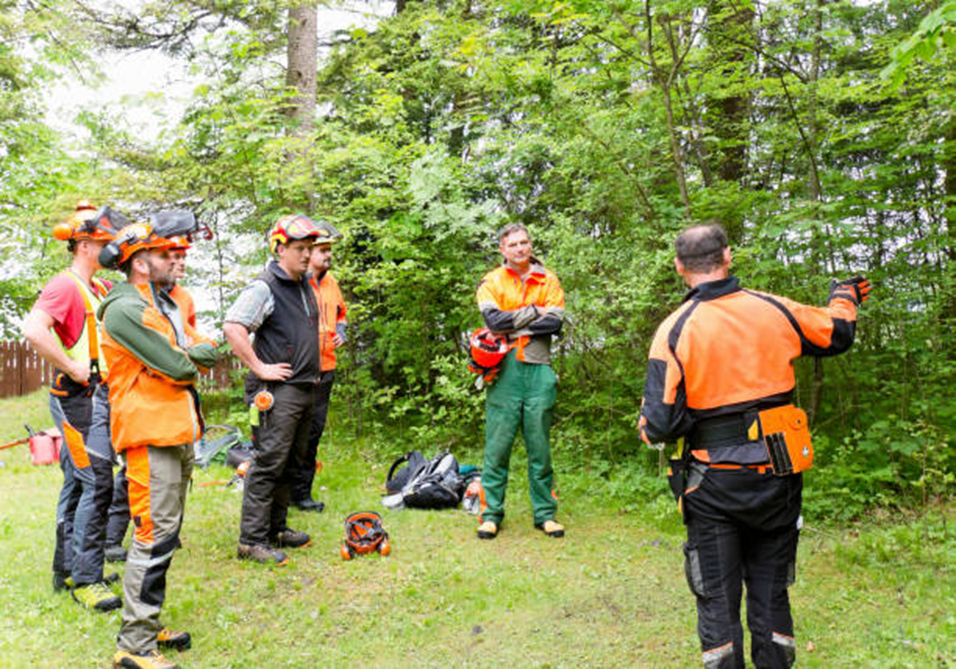
Professional clearing saw courses combine classroom theory with hands-on field assessment. This blended format ensures workers understand both technical knowledge and practical application. The objective is to ensure that safety principles remain consistent even under production pressure.
Key Training Modules
- Tool components and mechanical overview
- Pre-operational inspection checklist
- Personal protective equipment standards
- Safe fueling and storage procedures
- Hazard identification and site assessment
- Cutting techniques for varying vegetation density
- Crew spacing and communication protocols
- Fatigue awareness and hydration management
- Emergency response procedures
- Practical performance evaluation
The practical portion of clearing saw operator training requires participants to demonstrate safe throttle control, stable stance positioning, correct blade angle usage, and hazard awareness in simulated field conditions. This competency-based assessment ensures readiness before independent operation.
For additional safety insights and industry education, visit the brush saw safety training resource section.
Common Hazards Associated With Brush Saw Operations
Brush saw use exposes workers to multiple potential hazards, many of which occur quickly and without warning. Effective risk control begins with understanding how injuries typically happen and implementing preventive strategies before starting equipment.
Frequent Risk Factors
- Direct blade contact injuries
- Kickback caused by hidden debris
- Flying wood or rock fragments
- Slips and trips on unstable terrain
- Overexertion and fatigue-related errors
- Improper refueling practices
- Inadequate crew spacing
Structured chainsaw and brush saw safety programs emphasize hazard anticipation. Operators are trained to conduct visual site surveys, identify unstable footing, maintain safe working distances, and adjust cutting direction based on vegetation density.
Workers who complete formal clearing saw operator training develop improved situational awareness. They understand that hazard management is continuous and requires constant environmental scanning throughout the task.
Personal Protective Equipment for Brush Saw Operators
Personal protective equipment serves as a final layer of defense when engineering and administrative controls cannot eliminate risk entirely. Certification programs stress that PPE must be properly fitted, inspected, and maintained regularly.
Required Protective Equipment
Proper PPE usage is integrated into brush saw safety training to ensure workers understand limitations, replacement schedules, and inspection requirements. Training reinforces that PPE is not a substitute for safe technique but a critical complementary safeguard.
| PPE Item | Purpose | Safety Benefit |
| Helmet with face shield | Protects head and face | Reduces impact and debris injuries |
| Hearing protection | Controls noise exposure | Prevents long-term hearing loss |
| Cut-resistant chaps | Shields legs | Minimizes severity of lacerations |
| Steel-toe boots | Protects feet | Guards against falling objects |
| Protective gloves | Enhances grip | Reduces vibration strain |
Comparing Chainsaw and Brush Saw Safety
Although brush saws and chainsaws are both common in vegetation management, their operating mechanics and risk profiles differ significantly. Understanding these differences helps operators choose the correct tool and apply safe handling methods.
Comprehensive chainsaw and brush saw safety training clarifies these distinctions. Workers learn tool-specific controls, kickback zones, and safe shutdown procedures for each piece of equipment. This reduces misuse and improves task efficiency.
| Feature | Brush Saw | Chainsaw |
| Primary Use | Clearing shrubs and saplings | Cutting larger timber |
| Cutting Mechanism | Circular metal blade | Chain-driven cutting bar |
| Typical Risk | Blade kickback | Chain derailment |
| Training Focus | Ground-level cutting | Controlled tree felling |
Benefits of Brush Saw Safety Certifications
Improved Workplace Safety
Workers who complete recognized brush saw safety certifications demonstrate improved hazard recognition, better equipment handling, and consistent adherence to safe work procedures. This directly reduces injury rates and severity across forestry and land clearing operations.
Increased Operational Efficiency
Operators trained through formal clearing saw courses apply efficient cutting patterns and proper blade engagement techniques. This reduces unnecessary strain on equipment, extends tool lifespan, and improves productivity without compromising safety.
Strengthened Employer Documentation
Maintaining documentation of completed brush saw safety certifications supports audit readiness and regulatory compliance. Clear training records demonstrate proactive workforce development and responsible risk management practices.
Who Should Complete Clearing Saw Operator Training?
Certification is recommended for all workers who operate powered vegetation-clearing tools, including:
- Forestry technicians
- Utility corridor crews
- Municipal vegetation teams
- Land clearing contractors
- Environmental restoration personnel
Formal clearing saw operator training ensures that all team members operate under consistent safety expectations. Standardized instruction reduces variation in technique and strengthens overall crew coordination.
For broader workplace safety programs, visit brush saw safety training for additional service information.
How Often Should Brush Saw Certification Be Renewed?
Certification renewal ensures that knowledge remains current and practical skills remain sharp. Over time, complacency can develop, particularly in repetitive tasks. Refresher training helps reinforce best practices and address any procedural drift.
Renewal frequency may depend on:
- Employer safety policies
- Equipment upgrades
- Incident history
- Regulatory changes
- Time elapsed since last training
Periodic review strengthens long-term competency and reinforces continuous improvement within safety systems.
Steps to Enroll in Brush Saw Safety Training
1. Assess Workforce Needs
Employers should review job roles and determine which workers require certification based on direct exposure to brush saw operations. This assessment should include evaluating daily responsibilities, frequency of equipment use, supervision levels, and potential hazard exposure across different job sites and project types.
2. Register for Clearing Saw Courses
Select programs that include both classroom instruction and hands-on evaluation to ensure competency verification. Employers should confirm that the curriculum covers safety standards, equipment inspection procedures, risk management strategies, and practical field simulations aligned with real operational conditions.
3. Complete Practical Assessment
Participants must demonstrate safe tool handling, hazard awareness, and correct cutting technique under instructor supervision. The evaluation should measure body positioning, throttle control, environmental scanning, communication practices, and the ability to respond appropriately to unexpected obstacles or changing terrain conditions.
4. Maintain Certification Records
Training documentation should be retained for audit purposes and internal compliance tracking. Employers should securely store certificates, attendance records, assessment results, and renewal timelines to ensure quick access during inspections, regulatory reviews, or internal safety evaluations.
To schedule sessions or discuss training options, visit the contact us page for further information.
Building Safer Forestry and Land Clearing Operations
Formal certification establishes a measurable standard of competence in environments where equipment-related injuries can be severe. Structured brush saw safety training reinforces hazard awareness, mechanical understanding, safe posture, crew coordination, and emergency preparedness.
At Southbrook Safety & Consulting Ltd., training programs are structured to reflect the real conditions faced by forestry and vegetation management professionals. For scheduling information, group training coordination, or certification inquiries, please visit the contact us page to connect with a training coordinator and support safer field operations through informed preparation.
Frequently Asked Questions
1. What is brush saw certification?
Brush saw certification confirms that an operator has completed structured clearing saw courses and successfully demonstrated safe operational competency through formal evaluation.
2. Why is brush saw safety training important?
It reduces injury risk, supports regulatory compliance, improves productivity, and ensures consistent application of safe work procedures in forestry and land clearing environments.
3. Is chainsaw training the same as brush saw training?
No. While related, chainsaw and brush saw safety programs address different tools, operational techniques, hazard zones, and mechanical characteristics.
4. How long does certification last?
Validity periods vary based on employer requirements and industry standards. Periodic refresher training is commonly recommended to maintain competency.
5. Does training include hands-on evaluation?
Yes. Most clearing saw operator training programs require participants to demonstrate practical skill under supervised conditions.