
Chainsaw Safety Training for High-Risk Work: What Operators Should Know Before Cutting
Chainsaw safety training is essential for anyone preparing to perform cutting work in environments where hazards can change quickly. From forestry and landscaping to property maintenance and storm cleanup, chainsaw operators must understand how to assess risks, handle equipment correctly, and respond to unexpected situations. Proper preparation helps reduce the likelihood of injuries, equipment damage, and unsafe working conditions.
At Southbrook Safety & Consulting, safety education is an important part of preparing workers for demanding tasks. Operators need more than basic familiarity with a chainsaw. They must recognize potential hazards, understand safe operating procedures, use appropriate protective equipment, and know when conditions make cutting unsafe.
Whether you are new to chainsaw work or have years of practical experience, developing safe working habits is essential before starting a high-risk cutting task. Understanding these responsibilities can help you approach each job with greater awareness and confidence.
Why Chainsaw Safety Training Matters for High-Risk Work
Chainsaws are powerful tools designed for demanding cutting applications. However, their high-speed cutting chains, sharp components, and engine or motor power create serious risks when equipment is handled incorrectly. Even routine cutting tasks can become dangerous when operators overlook hazards or work in unsuitable conditions.
High-risk environments introduce additional challenges. Uneven ground, unstable trees, overhead branches, changing weather, and restricted access can make it harder to maintain control and respond safely.
Chainsaw safety training helps operators understand these risks before beginning work. It reinforces the importance of planning, hazard identification, correct equipment use, and safe operating practices.
Training is particularly important for workers who perform cutting activities as part of their regular duties. Employers must also consider the nature of the work, the operator’s experience, and the hazards associated with the specific job.
Key benefits of appropriate training include:
- Better recognition of hazards before cutting begins.
- Improved understanding of chainsaw controls and safe operating procedures.
- Greater awareness of personal protective equipment requirements.
- More informed decisions about when to stop work.
- Stronger communication between workers and supervisors.
- Better preparation for emergencies and unexpected changes.
Training cannot eliminate every risk, but it can help operators make safer decisions and understand their responsibilities.
Understanding the Risks Before You Start Cutting
Before operating a chainsaw, workers should understand the hazards associated with the material being cut and the surrounding environment. A task that appears straightforward may involve hidden dangers that require additional planning or specialist assistance.
Kickback and Loss of Control
Kickback occurs when the moving chain contacts an object or becomes pinched in a way that causes the guide bar to move suddenly. This reaction can happen rapidly and may cause severe injuries, particularly when the operator is not positioned appropriately or loses control of the saw.
Operators should understand the causes of kickback, the areas of the guide bar associated with increased risk, and the equipment manufacturer’s safety instructions. Correct equipment maintenance, suitable cutting techniques, and appropriate training are important parts of risk reduction.
Falling Branches and Unstable Trees
Branches under tension can move unexpectedly when cut. Dead limbs, partially fallen trees, and damaged trunks can also create unpredictable conditions.
Storm-damaged trees deserve particular attention because branches and trunks may be under unusual stress. Cutting these materials without understanding the forces involved can result in serious injury.
Workers should not assume that experience with ordinary cutting tasks qualifies them to manage unstable trees or complex overhead hazards.
Slips, Trips, and Uneven Ground
Wet surfaces, loose branches, mud, rocks, and steep slopes can affect balance and movement. These conditions may increase the likelihood of losing control of a chainsaw or falling while carrying equipment.
Before starting work, operators should assess their footing, identify suitable access and escape routes where applicable, and remove avoidable obstructions when it is safe to do so. Weather and micro-climate conditions can also affect footing, equipment handling, and cutting accuracy. To understand these risks better, read our blog on how micro-climate conditions affect chainsaw safety and cutting accuracy.
Noise, Vibration, and Fatigue
Chainsaw operation can expose workers to significant noise and hand-arm vibration. Extended work periods may also contribute to fatigue, reduced concentration, and slower reactions.
Appropriate hearing protection, regular equipment maintenance, work-rest planning, and awareness of exposure limits are essential for safer chainsaw operation. Workers should stop if fatigue or discomfort affects their ability to operate equipment safely. To learn more about workplace safety and best practices, read our blogs for helpful guidance from Southbrook Safety & Consulting.
Essential Preparation Before Operating a Chainsaw
Preparation should take place before the saw starts. Operators need to understand the task, inspect their equipment, assess the work area, and confirm that the work can be completed safely within their level of competence.
1. Assess the Work Area
Begin by examining the cutting location and identifying potential hazards. Consider nearby people, buildings, vehicles, overhead obstructions, electrical hazards, unstable material, and the condition of the ground.
For tree work, assess the direction of lean, visible damage, hanging branches, and other signs of instability. Where the situation involves significant uncertainty or complex tree conditions, obtain assistance from a suitably qualified professional.
Establish an appropriate exclusion zone and ensure that other workers and members of the public remain clear of the operating area.
2. Inspect the Chainsaw
A pre-use inspection helps identify problems that could affect safe operation. Follow the manufacturer’s instructions and applicable workplace procedures.
| Component | What to Check |
|---|---|
| Chain | Correct tension, sharpness, lubrication, and signs of damage |
| Guide bar | Wear, damage, and correct installation |
| Chain brake | Condition and operation according to manufacturer instructions |
| Throttle control | Correct operation and return function |
| Safety features | Presence and condition of required guards and controls |
| Handles | Secure attachment and suitable grip surfaces |
| Fuel or battery system | Leaks, damage, secure connections, and correct handling |
| General condition | Loose components, visible defects, and maintenance concerns |
Do not operate a chainsaw with defective safety features or unresolved mechanical problems. Remove unsafe equipment from service and arrange the necessary inspection or repair.
3. Wear Appropriate Personal Protective Equipment
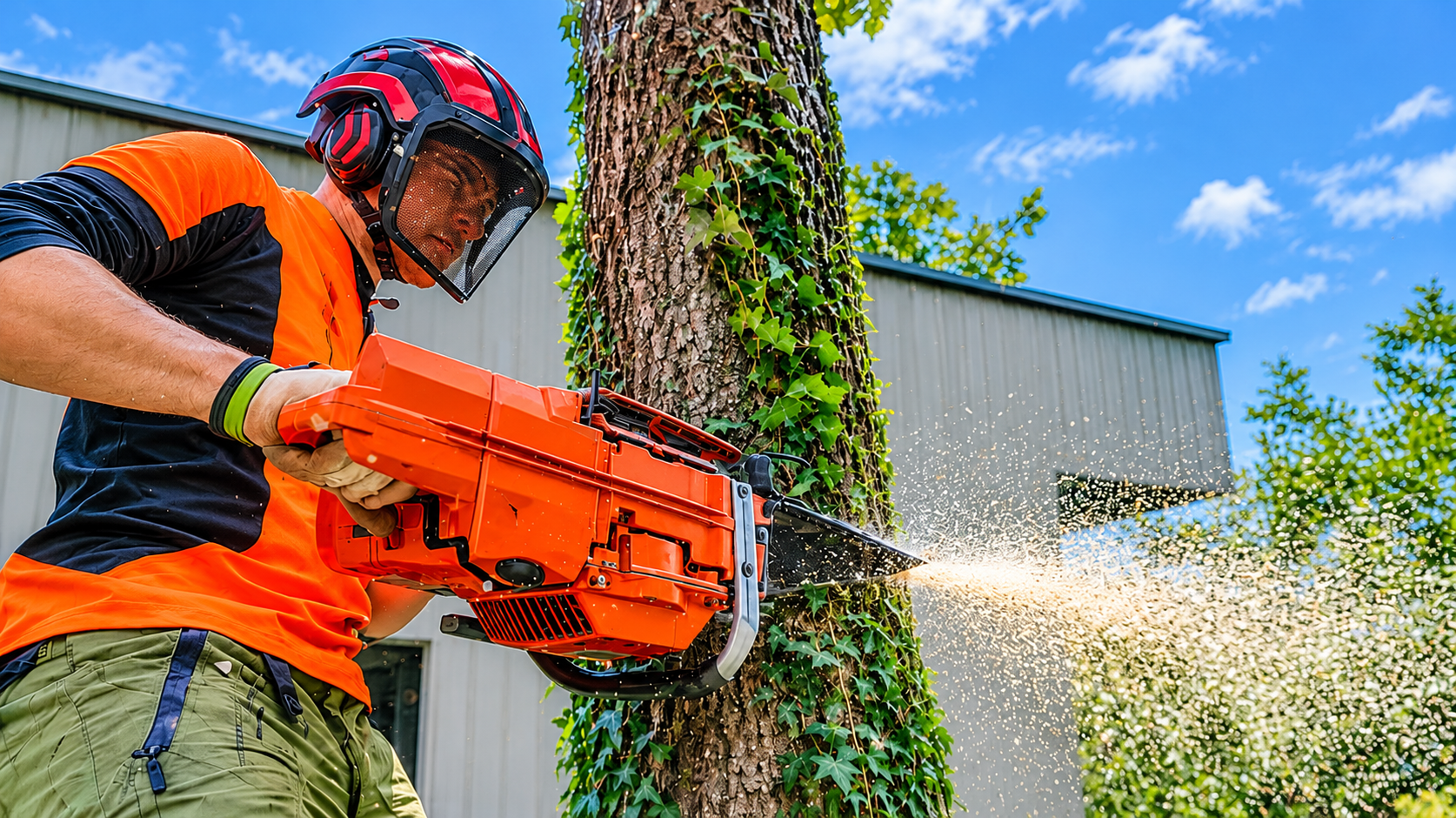
Personal protective equipment, commonly called PPE, is an essential part of chainsaw risk management. The required equipment depends on the task, workplace conditions, applicable standards, and the manufacturer’s recommendations.
Typical protective equipment may include:
- Chainsaw protective trousers or chaps appropriate to the task and applicable requirements.
- Protective footwear with suitable chainsaw protection and traction.
- Suitable gloves that support grip and protection.
- Eye protection and an appropriate face shield where required.
- Hearing protection suited to the equipment’s noise exposure.
- A suitable protective helmet when overhead hazards are present.
- High-visibility clothing where the work environment requires it.
PPE must fit properly, remain in good condition, and be suitable for the work being performed. Protective clothing does not make an otherwise unsafe cutting method acceptable.
4. Confirm the Work Plan
Before cutting begins, operators should understand the sequence of work, the hazards associated with each stage, and the circumstances that require work to stop.
For team-based operations, communication is particularly important. Workers should know who is responsible for coordinating the task, how warnings will be communicated, and how people will be kept outside the danger zone.
An emergency plan should also account for access to the worksite, communication arrangements, first aid, and the ability to contact emergency services.
What Chainsaw Operation Training Should Cover
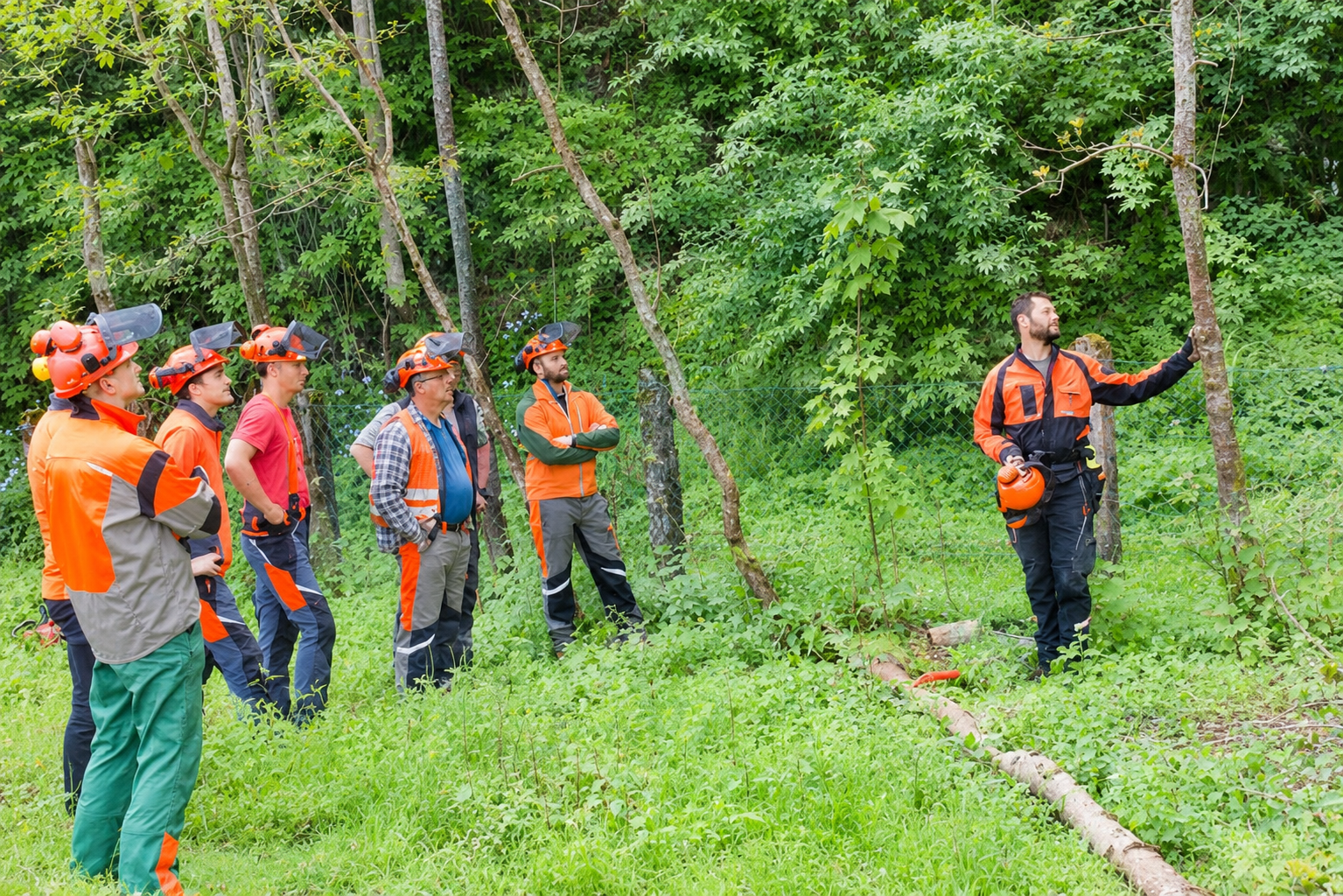
Effective chainsaw operation training should combine safety knowledge with practical instruction appropriate to the operator’s role and the work being undertaken.
Simply watching someone use a chainsaw or relying on informal advice may leave important gaps in knowledge. Structured training helps operators understand the relationship between equipment, cutting techniques, environmental hazards, and personal responsibility.
A suitable training programme may cover the following areas.
Equipment Familiarisation and Maintenance
Operators should learn how to identify the main chainsaw components, understand safety controls, and carry out the required pre-use checks. Training should also explain chain condition, lubrication, maintenance requirements, and the importance of following manufacturer instructions.
Safe Starting and Handling Procedures
Training should address approved starting methods, stable positioning, secure handling, and safe movement with the equipment. Operators must understand how to maintain control and avoid unsafe practices when starting, transporting, or setting down a chainsaw.
Cutting Techniques and Kickback Awareness
Participants should learn how cutting conditions influence chainsaw behaviour. Instruction should address kickback prevention, chain binding, safe positioning, and the importance of maintaining control throughout the task.
Practical techniques should be taught and assessed by a competent instructor in an appropriate training environment.
Hazard Identification and Risk Assessment
Operators should be able to recognize hazards before and during cutting. This includes understanding unstable timber, overhead hazards, environmental conditions, nearby workers, and situations that exceed their competence.
Training should encourage workers to reassess conditions whenever the work environment changes.
Emergency Procedures
Operators should understand what to do if an injury, equipment failure, or unexpected movement occurs. Training should reinforce the importance of stopping work when necessary, raising the alarm, and following the established emergency response plan.
The precise content of a chainsaw course should reflect the type of cutting work involved, the equipment used, and applicable workplace requirements.
Maintaining Safe Practices After Training
Completing training is an important step, but safe chainsaw operation requires continued attention. Skills can deteriorate when they are not used regularly, and equipment, workplace conditions, and responsibilities may change over time.
Operators should follow workplace procedures, maintain equipment according to manufacturer guidance, and report defects promptly. Supervisors should ensure that workers remain competent for their assigned duties and receive additional instruction when necessary.
Refresher training may be appropriate when an operator has been away from chainsaw work, has experienced a safety incident, changes equipment, or takes on unfamiliar cutting tasks.
Regular safety discussions can also help teams identify hazards and reinforce consistent working practices. Reviewing near misses and lessons learned allows organisations to improve their procedures before a more serious incident occurs.
For employers, maintaining suitable training records and documenting relevant assessments can support workforce planning and demonstrate that operator competence is being managed responsibly. Regular safety discussions can also help teams identify hazards and reinforce consistent working practices. Reviewing near misses and lessons learned allows organisations to improve their procedures before a more serious incident occurs. For additional guidance on preventing equipment-related injuries, read our blog on brush saw safety mistakes and injury prevention.
Prepare for High-Risk Cutting Work With Southbrook Safety & Consulting
High-risk cutting work requires careful preparation, appropriate equipment, hazard awareness, and the ability to recognize when a task is beyond an operator’s competence. Chainsaw safety training helps new and experienced workers understand these responsibilities and develop safer operating habits.
From pre-use inspections and protective equipment to kickback awareness and emergency planning, every part of the process contributes to a safer work environment. Training should always reflect the actual tasks being performed and the risks operators may encounter.
Southbrook Safety & Consulting supports workplace safety through training and consultation aligned with practical safety needs. Preparing workers for demanding tasks helps organizations strengthen their safety practices and make more informed decisions about operator readiness.
If you need guidance on suitable chainsaw training for your workplace or workforce, Contact us to discuss your training requirements and the type of cutting work your operators perform.
Frequently Asked Questions
1. What is chainsaw safety training?
Chainsaw safety training teaches operators how to identify hazards, inspect equipment, use appropriate protective equipment, follow safe operating procedures, and respond to emergencies. Training should reflect the operator’s experience and the specific cutting tasks they are expected to perform.
2. Who should take a chainsaw course?
A chainsaw course may be suitable for forestry workers, landscapers, property maintenance personnel, and others who use chainsaws as part of their work. Beginners need foundational instruction, while experienced operators may require additional training for unfamiliar equipment or higher-risk tasks.
3. What does chainsaw operation training include?
Chainsaw operation training may include equipment familiarisation, pre-use inspections, PPE requirements, safe starting and handling, cutting hazards, kickback awareness, risk assessment, maintenance, and emergency procedures. Practical instruction and assessment should match the work being undertaken.
4. Why is chainsaw safety training important for experienced operators?
Experienced operators can still encounter unfamiliar hazards, changing work conditions, or equipment problems. Training helps reinforce safe practices, identify knowledge gaps, and confirm that operators remain competent for their assigned duties.
5. How often should chainsaw operators receive refresher training?
Refresher training should be based on the operator’s competence, the risks involved, workplace policies, and applicable requirements. Additional instruction may be needed after extended periods away from the task, changes in equipment or responsibilities, or incidents that reveal gaps in knowledge or practical skills.