
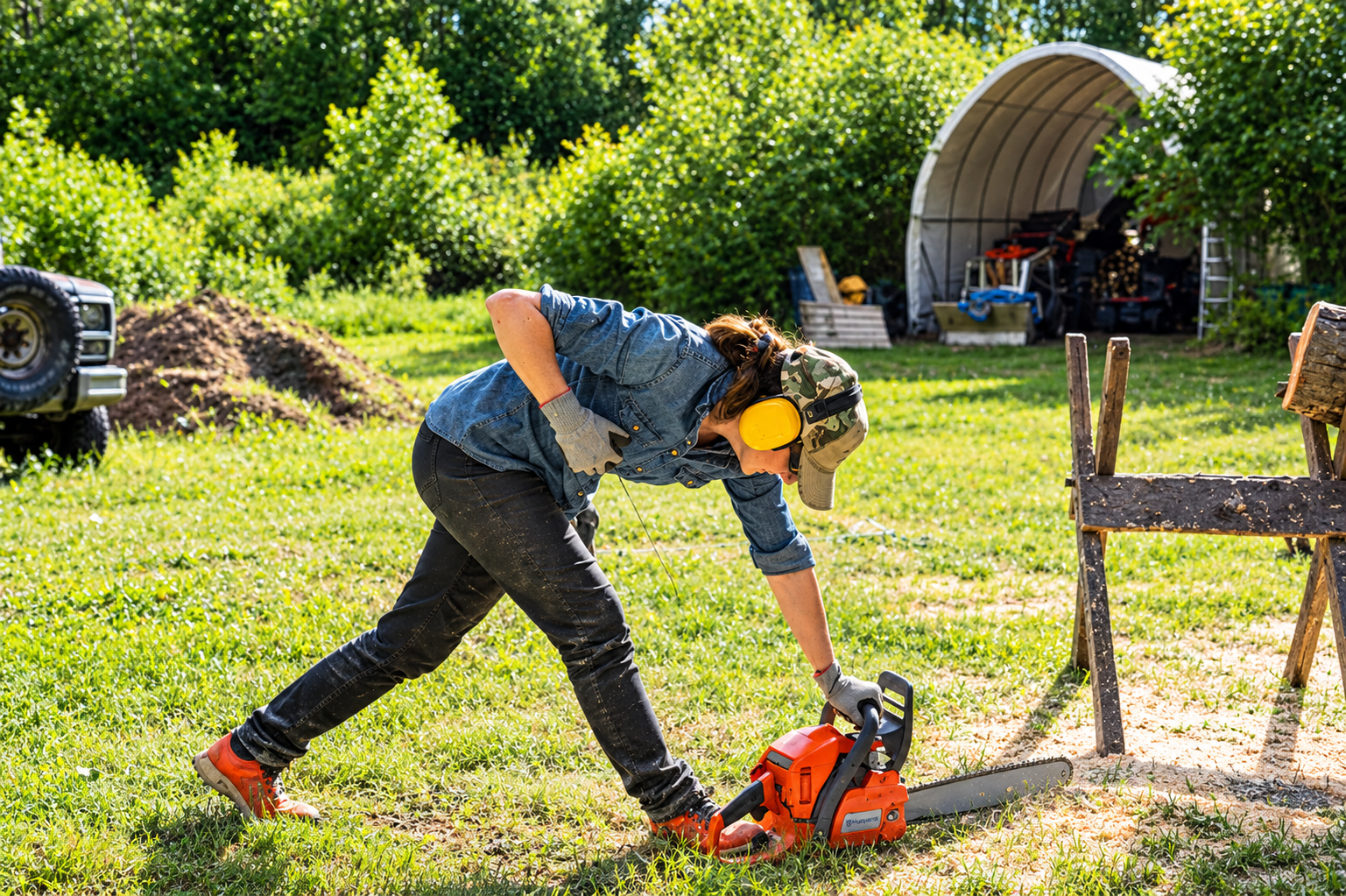
What Separates Basic Safety Courses from Industry-Recognized Chainsaw Training Programs
Choosing the right training is an important decision for anyone who operates a chainsaw as part of their work. While many chainsaw courses may cover basic safety information, the depth, structure, practical instruction, and competency evaluation can vary considerably.
For employers, supervisors, and workers, the important question is not simply whether a course provides a certificate. The more important question is whether the training prepares an operator to recognize hazards, handle equipment correctly, apply appropriate techniques, and make safer decisions in actual working conditions.
Southbrook Safety and Consulting Ltd. has extensive experience in chainsaw and workplace safety training. Its approach combines practical instruction with established safety techniques and progressive operator development. You can learn more about the company’s approach through its Chainsaw Training page.
What Makes a Chainsaw Training Program Different?
The quality of a training program is influenced by more than the course title. Strong programs are built around clearly defined learning objectives, relevant safety principles, appropriate practical exercises, and meaningful competency evaluation.
A quality program should help an operator understand not only what to do, but also why a particular procedure matters.
For chainsaw operators, this can include understanding:
- Chainsaw components and controls
- Personal protective equipment
- Pre-operational inspections
- Safe starting procedures
- Hazard identification
- Worksite preparation
- Cutting techniques
- Equipment maintenance
- Reactive forces
- Safe work practices
- Emergency considerations
Southbrook Safety’s chainsaw training incorporates these types of topics while emphasizing practical application. Its training is based on established chainsaw safety techniques and professional cutting practices.
Knowledge Is Only One Part of Competency
A worker can memorize safety rules without being fully prepared to apply them in the field.
Competency requires knowledge, practical skill, awareness, judgment, and consistent application.
This distinction is especially important for chainsaw work because conditions can change quickly. Operators may encounter uneven terrain, different wood conditions, obstacles, weather changes, nearby workers, or other site-specific hazards.
Industry-focused training prepares operators to think about these factors rather than simply follow a fixed sequence of instructions.
Basic Safety Courses vs Industry-Recognized Training
A basic course can be useful for introducing workers to fundamental concepts. However, organizations should understand what they are actually receiving from a training program.
The following comparison can help illustrate the difference:
| Training Factor | Basic Safety Course | Industry-Recognized Training |
| Safety theory | Basic principles | Structured and comprehensive |
| Equipment knowledge | General overview | Detailed equipment awareness |
| Hazard identification | Introduction | Practical hazard assessment |
| Hands-on training | May be limited | Core part of skill development |
| Cutting techniques | Basic explanation | Demonstration and practice |
| Maintenance | General information | Practical equipment care |
| Competency evaluation | May focus on knowledge | Knowledge and practical skills |
| Training levels | May use one general course | Can progress with operator responsibilities |
| Jobsite application | Limited focus | Strong practical emphasis |
| Certification value | Completion evidence | Supports verified competency |
The distinction is important because a certificate should represent meaningful training rather than simply course attendance.
Why Hands-On Training Matters
Chainsaw operation is a practical skill. Operators must control the equipment while maintaining body position, awareness, balance, and attention to the surrounding environment.
These abilities cannot be fully developed through theory alone.
Hands-on training gives participants an opportunity to practice techniques under appropriate supervision. It also allows instructors to observe performance and identify areas that require improvement.
This is one of the reasons Southbrook Safety places importance on hands-on training. Practical instruction helps bridge the gap between understanding a safety procedure and applying it correctly.
Practical Skills That Need to Be Developed
Depending on the level and type of work, practical chainsaw training may involve developing skills related to:
- Equipment inspection
- Safe starting methods
- Saw positioning and control
- Basic cutting
- Limbing
- Bucking
- Managing wood tension
- Hazard recognition
- Worksite preparation
- Equipment maintenance
The objective is to build repeatable habits that operators can carry into their working environment.
Understanding Course Standards
When evaluating chainsaw safety courses, employers should look beyond marketing language and consider how the training is structured.
Course standards provide a framework for what participants should learn and how competency should be demonstrated.
A strong training program should have clearly defined objectives and appropriate evaluation methods. The content should also be relevant to the tasks participants will actually perform.
Southbrook Safety’s experience in developing and delivering chainsaw training is an important part of its training approach. The company states that its chainsaw training is based on the Husqvarna Sweden safety techniques manual and videos, with techniques developed and used by professional cutters.
Its background also includes involvement in the development and revision of the Chainsaw Proficiency Safety Program.
This experience supports an approach that goes beyond generic safety instruction.
Certification Value: What Should a Certificate Mean?
The certification value of a chainsaw course depends largely on what the training and evaluation behind the certificate actually represent.
A certificate is more meaningful when it is supported by structured instruction, defined learning outcomes, practical skills, and competency assessment.
For employers, documentation can help demonstrate that workers have received appropriate training. However, employers should still consider whether the training level matches the tasks assigned to each operator.
For workers, certification can provide documented evidence of completed training while also helping establish a foundation for safer work practices.
Certification should therefore be viewed as part of competency development rather than as a replacement for experience, supervision, or continued learning.
Why Progressive Training Levels Matter
Not every chainsaw task carries the same level of risk or complexity.
A worker performing basic cutting activities may have different training needs from an operator responsible for advanced tree felling or complex cutting conditions.
Progressive training allows operators to develop skills in stages.
Southbrook Safety’s training model recognizes multiple levels of chainsaw competency. Its published five-level approach progresses from awareness and basic operation toward more advanced cutting, felling, and specialized operations.
This type of progression helps employers match training with job responsibilities.
Matching Training to Operator Responsibilities
Training should reflect what an operator is expected to do.
For example, training considerations may differ for:
- Ground workers
- Property maintenance workers
- Landscaping crews
- Municipal workers
- Forestry support personnel
- Utility crews
- Storm cleanup teams
- Advanced tree-felling operators
- Specialized chainsaw professionals
The more complex the work, the more important it becomes to verify that the operator has the appropriate knowledge, practical skills, and experience.
Employers can learn more about progressive chainsaw competency through the five levels of chainsaw certification guide.
Hazard Assessment Should Be Part of the Training
A chainsaw operator does not work in isolation from the surrounding environment.
Before starting a task, operators need to recognize hazards that could affect themselves, coworkers, equipment, or the work area.
A strong training program should therefore teach operators how to identify and respond to hazards rather than simply provide a list of safety rules.
Potential considerations can include:
- Tree condition
- Ground stability
- Overhead hazards
- Nearby structures
- Other workers
- Escape routes
- Weather
- Wood tension
- Equipment condition
- Worksite access
Southbrook Safety’s broader safety services include hazard evaluations and safety consulting, reinforcing the importance of hazard identification as part of a wider workplace safety approach.
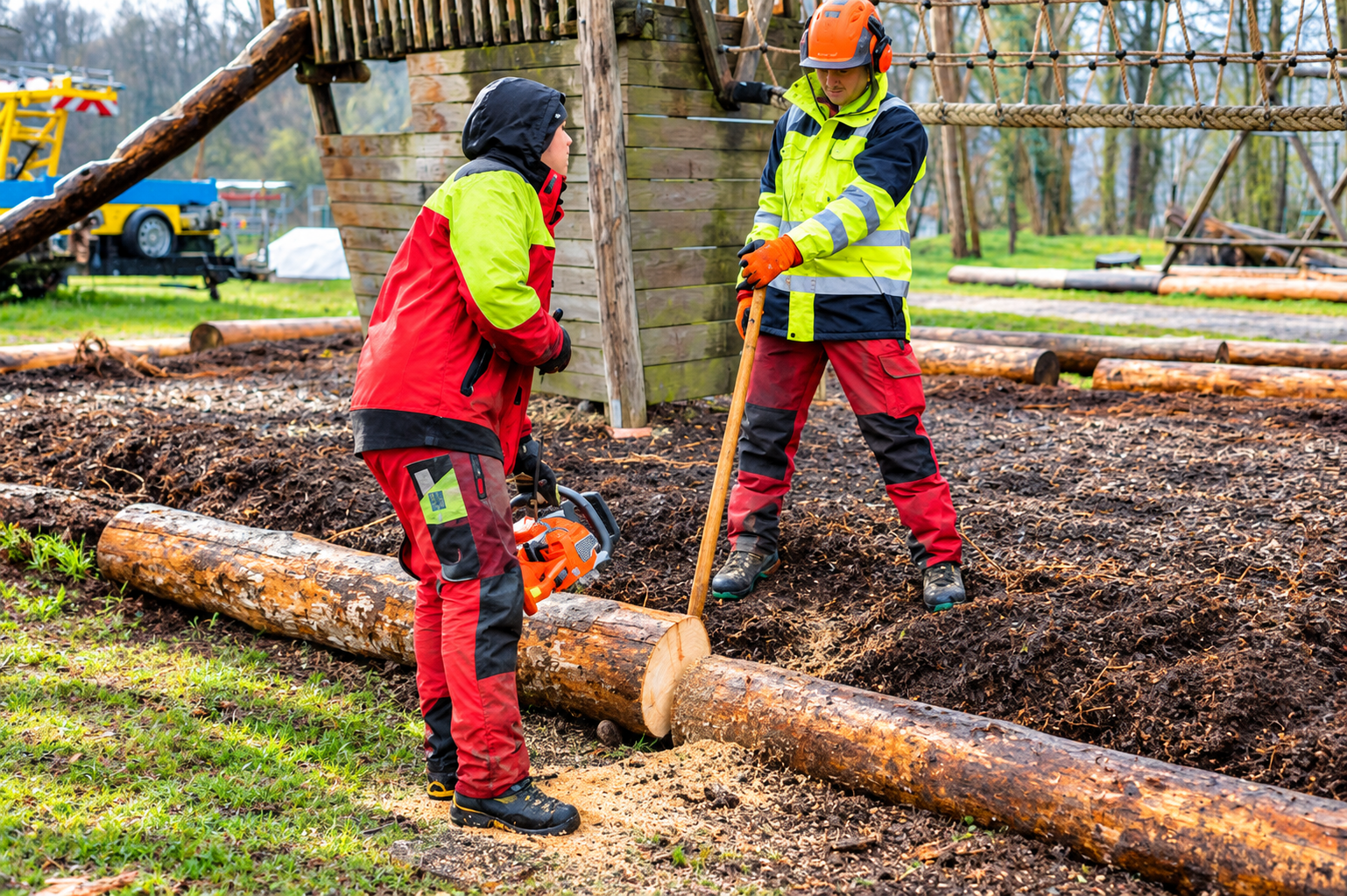
Equipment Knowledge Separates Strong Training From Basic Instruction
A chainsaw operator should understand the equipment they are using.
This includes recognizing major components, understanding safety features, performing appropriate inspections, and identifying conditions that may affect safe operation.
Training should not treat the chainsaw simply as a tool that starts and cuts.
Operators need to understand how equipment condition can influence performance and safety.
Southbrook Safety’s online chainsaw safety course includes topics covering chainsaw components and safety features, types of chainsaws, pre-operational inspections, function checks, startup methods, cutting techniques, post-operational maintenance, chain filing, and proper maintenance.
Those topics demonstrate the importance of combining operational knowledge with equipment care. More information can be found on the Chainsaw Safety Online Course Overview.
Why Practical Evaluation Adds Value
A written test can measure what a participant knows. Practical evaluation can help determine whether the participant can apply that knowledge.
This distinction matters when training involves equipment operation.
An operator may know that an inspection should be performed but still fail to recognize a problem when inspecting equipment. They may understand a cutting principle but struggle to apply it correctly.
Practical evaluation provides an opportunity to observe these skills.
For employers, this can provide greater confidence that training is connected to actual operator competency.
Evaluation Should Reflect Real Responsibilities
Evaluation should be relevant to the type of work the operator will perform.
For basic operators, evaluation may focus on safe equipment handling, inspections, starting methods, and fundamental cutting skills.
More advanced operators may require evaluation of additional competencies associated with limbing, bucking, felling, tensioned wood, hazardous trees, or other complex conditions.
This is another reason progressive chainsaw courses can be more useful than a one-size-fits-all approach.
What Employers Should Look For in Chainsaw Courses
Employers choosing training for their workforce should consider the complete training program rather than focusing only on the certificate.
A useful selection checklist includes:
- Does the course include practical training?
- Are hazards addressed in the training?
- Are equipment inspections covered?
- Are appropriate cutting techniques demonstrated?
- Is there practical evaluation?
- Does the training level match the job?
- Are learning objectives clearly defined?
- Does the provider have relevant industry experience?
- Is equipment maintenance addressed?
- Does the program support continued competency?
These questions can help employers distinguish meaningful training from a basic course that may not adequately address the requirements of their workforce.
Why Experience and Instructor Knowledge Matter
The quality of instruction can have a significant influence on the learning experience.
Experienced instructors can bring practical knowledge to training and explain how safety principles apply to actual work situations.
Southbrook Safety and Consulting Ltd. has a long history in safety training and chainsaw education. The company’s experience includes chainsaw and brush saw safety, equipment care, professional cutting techniques, and workplace safety.
The company’s founder, Wade Smith, has been involved in the training industry since 1985 and has extensive experience in chainsaw safety and efficient usage.
This depth of experience contributes to a training approach that connects formal instruction with practical knowledge.
Online and Hands-On Training Can Serve Different Purposes
Technology has made safety education more accessible, and online learning can be useful for introducing important concepts.
Southbrook Safety offers an online chainsaw safety course covering areas such as safety requirements, hazard assessment, equipment inspection, cutting techniques, and maintenance.
However, practical chainsaw operation involves physical skills that require appropriate hands-on development.
For this reason, employers should consider the type of training needed for the actual task rather than assuming that one delivery method meets every training requirement.
A blended approach may be useful when theoretical knowledge and practical competency both need to be addressed.
How to Choose the Right Training Provider
Selecting a training provider should involve more than searching for the shortest or simplest course.
Look for a provider that can demonstrate:
- Relevant industry experience
- Clearly structured training
- Practical instruction
- Competency-focused evaluation
- Appropriate training levels
- Hazard assessment instruction
- Equipment knowledge
- Relevant safety techniques
- Training aligned with job responsibilities
- A commitment to ongoing safety education
For organizations seeking broader workplace safety support, Southbrook Safety also provides safety consulting services, including workplace safety support and hazard evaluation. Explore our latest blogs for more helpful insights and practical information on workplace safety, training, and hazard prevention.
Building a Culture of Competency
The strongest workplace safety programs do not treat training as a one-time administrative requirement.
Instead, training should be part of a larger culture of competency.
Employers can support this by:
- Matching workers to appropriate tasks
- Providing suitable training
- Supervising new or developing operators
- Reinforcing safe work practices
- Addressing observed competency gaps
- Encouraging workers to report hazards
- Reviewing training needs as responsibilities change
Workers also have an important role. They should understand their own limitations and avoid taking on tasks for which they have not received appropriate training or practical preparation.
Why Southbrook Safety Takes a Practical Approach
Southbrook Safety and Consulting Ltd. combines safety education with extensive industry experience. Its chainsaw training has been developed around established professional techniques and emphasizes practical skill development.
The company has also contributed to the development and revision of chainsaw proficiency training programs and provides safety services across Alberta, British Columbia, Saskatchewan, and the Yukon.
This practical background matters when selecting chainsaw safety courses because effective training should reflect the realities of the work environment.
The goal should always be to develop operators who understand the equipment, recognize hazards, apply appropriate techniques, and maintain a safety-first mindset.
Conclusion: Choose Training That Builds Real Competency
Choosing between basic and industry-recognized chainsaw courses requires looking beyond the certificate. The real value of training comes from the quality of instruction, practical experience, hazard awareness, equipment knowledge, competency evaluation, and relevance to the work being performed.
A strong chainsaw training program should prepare workers to apply safety principles rather than simply remember them. Hands-on instruction, progressive training levels, practical evaluation, and experienced instructors can help close the gap between knowing a procedure and performing it safely.
Southbrook Safety and Consulting Ltd. brings extensive experience in chainsaw safety, workplace training, hazard evaluation, and practical operator development. If you are looking for training that supports real-world competency and workplace safety, Contact us to discuss the right chainsaw training approach for your team.
Frequently Asked Questions
1. What should I look for in chainsaw courses?
Look for structured training that combines safety theory, equipment knowledge, hazard assessment, hands-on practice, and competency evaluation. The course should also match the operator’s actual job responsibilities.
2. Are all chainsaw safety courses the same?
No. Courses can differ in content, practical training, evaluation methods, instructor experience, and competency levels. Employers should review the complete training structure before selecting a program.
3. Why is hands-on training important?
Hands-on training allows operators to practice chainsaw handling and cutting techniques under appropriate supervision. It also helps instructors identify areas where additional practice may be needed.
4. What is the certification value of chainsaw training?
Certification provides documented evidence that a worker has completed a defined training program. Its value is stronger when supported by practical instruction and competency evaluation.
5. How do I choose the right chainsaw training level?
The appropriate level depends on the operator’s responsibilities, experience, and the complexity of the work. Training should match the tasks the worker is expected to perform.