
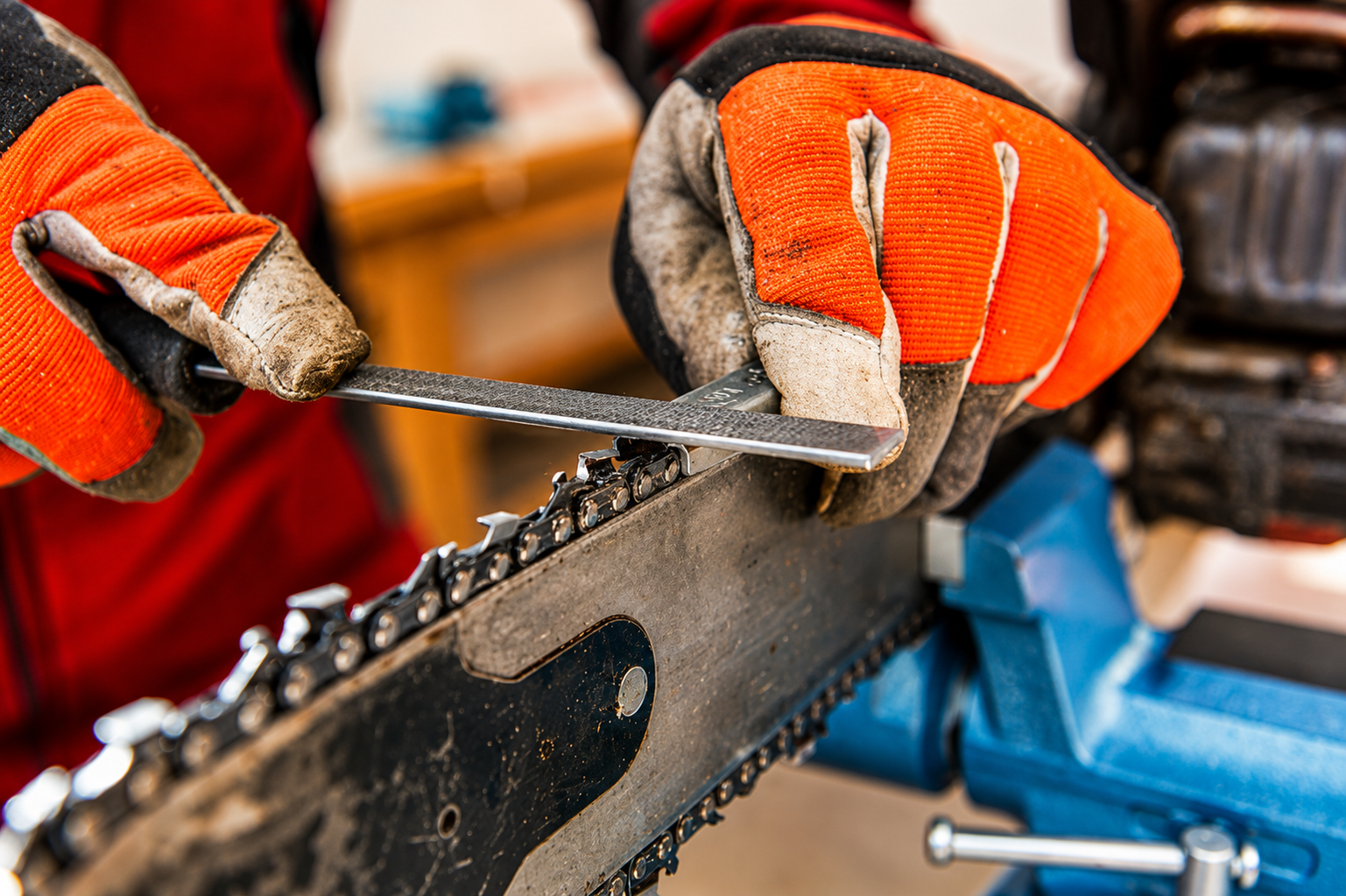
Why Poor Chainsaw Maintenance Is Costing Companies More Than Equipment Repairs
Chainsaws are among the most valuable tools used in forestry, arboriculture, landscaping, vegetation management, and construction projects. When maintained correctly, they help workers complete demanding tasks safely, efficiently, and consistently. However, many businesses underestimate the importance of chainsaw sharpening and cleaning, treating maintenance as something that can wait until equipment begins to fail.
This approach often creates far greater costs than simply replacing worn components. Poor maintenance affects worker productivity, increases operational downtime, raises safety risks, shortens equipment lifespan, and can lead to expensive project delays. For companies managing multiple chainsaws across crews, these hidden costs quickly accumulate and impact overall profitability.
A sharp, clean, and properly maintained chainsaw allows operators to work efficiently while reducing unnecessary strain on both the machine and the user. Regular maintenance also supports safer work practices by improving cutting accuracy and reducing the likelihood of mechanical failures.
At Southbrook Safety, we understand that safe equipment management is an essential part of workplace safety. Businesses that invest in proper equipment care alongside professional safety training create more productive worksites while protecting both their employees and operational budgets.
Why Chainsaw Maintenance Is a Business Investment Rather Than a Cost
Many organizations only schedule maintenance after performance problems become obvious. By that stage, reduced efficiency may already be affecting daily operations.
Routine chainsaw sharpening and cleaning helps businesses:
- Improve cutting performance
- Reduce equipment wear
- Extend machine lifespan
- Lower repair frequency
- Improve operator safety
- Minimize unexpected downtime
- Increase productivity across crews
Instead of viewing maintenance as another expense, successful businesses recognize it as preventative asset management that protects equipment investments.
The Hidden Costs of Poor Chainsaw Maintenance
Equipment repairs are often only one small part of the financial impact. Poor maintenance creates multiple operational problems that affect the entire business.
Reduced Productivity Across Every Job
A dull chain cuts much slower than a properly sharpened one. Operators must apply additional pressure, make repeated cutting passes, and spend more time completing routine tasks.
Over days, weeks, and months, this reduced efficiency significantly lowers productivity.
Businesses may experience:
- Longer project completion times
- Reduced daily output
- Increased labor costs
- Missed deadlines
- Lower crew efficiency
For companies managing multiple field teams, even small reductions in daily productivity can result in substantial annual losses.
Increased Downtime Costs
Unexpected equipment failures rarely happen at convenient times.
Chainsaws that receive little maintenance are more likely to experience:
- Chain damage
- Bar wear
- Engine performance issues
- Overheating
- Fuel system problems
- Air filter blockages
When equipment fails during active projects, work often stops until repairs or replacements are available.
These downtime costs often include:
| Hidden Downtime Cost | Business Impact |
| Idle workers | Reduced productivity |
| Delayed project schedules | Client dissatisfaction |
| Emergency equipment replacement | Operational disruption |
| Supervisor time managing breakdowns | Lower efficiency |
| Rescheduled work | Increased labor costs |
Preventative maintenance significantly reduces these disruptions by identifying small issues before they become major failures.
Faster Equipment Wear
Chainsaws are engineered to operate with sharp cutting teeth, proper lubrication, and clean airflow.
Without regular chainsaw sharpening and cleaning, components experience excessive stress.
This may lead to:
- Premature guide bar wear
- Increased chain stretch
- Damaged sprockets
- Higher engine temperatures
- Clutch wear
- Greater vibration
Replacing these parts repeatedly costs considerably more than performing routine maintenance throughout the year.
Why Chainsaw Sharpening and Cleaning Matters
Many operators focus only on whether the chainsaw starts. However, starting the engine does not necessarily mean the equipment is performing efficiently.
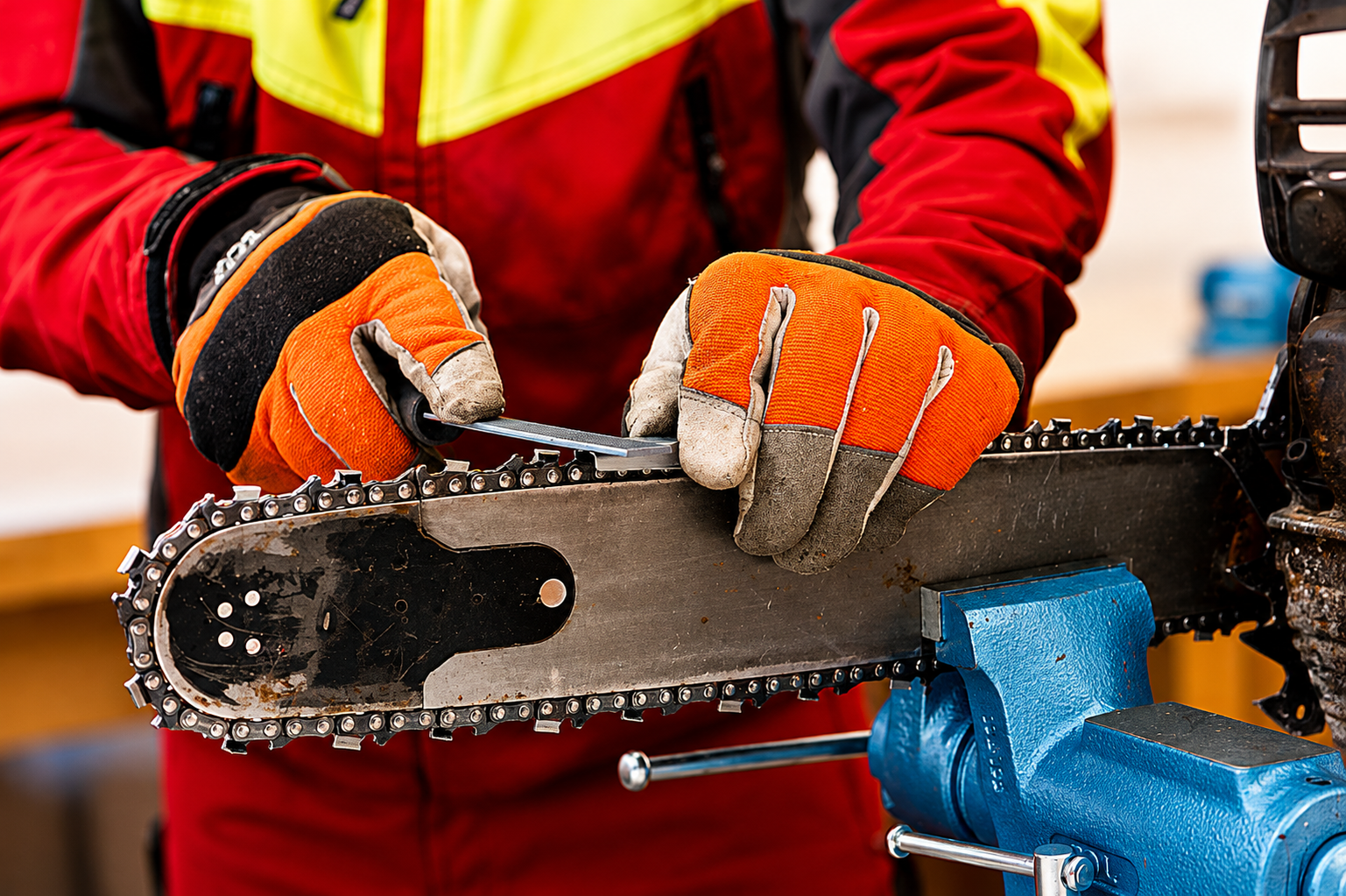
Regular chainsaw sharpening and cleaning keeps the entire cutting system operating as intended while reducing unnecessary stress on both the equipment and the operator.
A properly maintained chainsaw provides:
- Faster cutting performance
- Better fuel efficiency
- Cleaner cuts
- Reduced vibration
- Less operator fatigue
- Improved control
- Lower mechanical stress
Consistent maintenance also allows businesses to plan servicing rather than reacting to unexpected breakdowns.
Sharpening Improves Cutting Efficiency
Sharp chains require less force to cut through timber.
When cutting teeth become dull, operators naturally compensate by applying more pressure. This increases strain on the engine, chain, guide bar, and operator.
Benefits of regular sharpening include:
- Faster cutting speeds
- Reduced engine load
- Lower fuel consumption
- Improved cutting accuracy
- Less physical effort
For businesses completing high-volume cutting work every day, these improvements contribute directly to better productivity.
Cleaning Prevents Mechanical Problems
Wood dust, oil residue, bark particles, and debris build up quickly during normal chainsaw use.
Without regular cleaning, this accumulation can affect:
- Cooling airflow
- Chain lubrication
- Air filtration
- Moving components
- Overall engine performance
Routine cleaning helps prevent overheating while allowing technicians to identify worn or damaged components before they cause unexpected failures.
Proper cleaning also supports longer equipment life and more reliable daily performance.
Maintenance Supports Safer Work Practices
Safety is one of the most important reasons to maintain chainsaws correctly.
A dull or poorly maintained chainsaw is more difficult to control, increasing the likelihood of unsafe operation.
Poor maintenance may contribute to:
- Increased kickback risk
- Chain derailment
- Reduced cutting control
- Operator fatigue
- Equipment failure during operation
Businesses that prioritize equipment maintenance alongside operator competency create safer working environments for everyone involved.
For organizations looking to strengthen workplace safety practices, regularly reviewing safety procedures alongside equipment inspections helps reinforce consistent standards across every worksite. Southbrook Safety offers a range of safety training solutions that complement effective equipment management and support safer day-to-day operations.
The Financial Impact Extends Beyond Repair Bills
Equipment repairs are often the most visible cost of poor maintenance, but they are rarely the largest expense. Businesses frequently overlook the indirect costs that affect operations, employee performance, and customer satisfaction.
When chainsaws are not maintained correctly, the financial impact can include:
- Lower daily productivity
- Increased labor hours
- Delayed project completion
- More frequent equipment replacements
- Higher maintenance workloads
- Reduced return on equipment investment
- Increased downtime costs
These operational losses can far exceed the cost of implementing regular maintenance programmed.
How Poor Chainsaw Maintenance Affects Daily Operations
Businesses that rely on chainsaws for routine work need equipment that performs consistently every day. Even minor maintenance issues can disrupt schedules and reduce efficiency across multiple teams.
Project Delays Become More Common
Projects are carefully planned around equipment availability and workforce schedules. When a chainsaw breaks down unexpectedly, the entire workflow can be affected.
Common consequences include:
- Work stopping while equipment is repaired
- Crews waiting for replacement tools
- Delays to project milestones
- Additional planning and scheduling
- Reduced productivity across the site
Reliable equipment helps projects stay on schedule and improves overall operational performance.
Employee Productivity Declines
Workers using poorly maintained equipment often spend more time completing routine tasks.
For example:
- Cutting takes longer.
- Operators become fatigued more quickly.
- More effort is needed to complete each cut.
- Additional time is spent on adjusting or troubleshooting equipment.
Although each delay may seem small, the cumulative effect over weeks and months can significantly reduce business productivity.
Equipment Availability Becomes Unpredictable
Businesses operating multiple chainsaws depend on having equipment available whenever required.
Without preventative maintenance, organizations may experience:
- Unexpected breakdowns
- Multiple machines requiring repairs simultaneously
- Difficulty planning maintenance schedules
- Reduced equipment availability during busy periods
Planned servicing is far easier to manage than emergency repairs that interrupt operations.
Common Signs Your Chainsaw Needs Immediate Attention
Many maintenance issues develop gradually before becoming major mechanical failures. Recognizing early warning signs helps businesses prevent expensive repairs and minimize operational disruption.
Watch for the following indicators:
| Warning Sign | Possible Cause |
| Chainsaw pulls to one side | Uneven chain wear |
| Slow cutting performance | Dull chain |
| Excessive vibration | Loose or worn components |
| Smoke during cutting | Poor lubrication or overheating |
| Chain frequently loosens | Chain wear or tension issues |
| Increased fuel consumption | Engine inefficiency |
| Difficulty starting | Dirty air filter or fuel system issues |
| Unusual noises | Internal mechanical wear |
Addressing these issues early can reduce downtime costs and prevent more extensive repairs.
Building a Preventative Chainsaw Maintenance Programme
Successful businesses do not wait for equipment to fail. Instead, they establish routine maintenance schedules that keep chainsaws operating safely and efficiently.
An effective maintenance programme should include regular inspections, cleaning, sharpening, lubrication, and documentation.
Daily Maintenance Tasks
Before and after each shift, operators should:
- Inspect the chain for wear or damage.
- Check chain tension.
- Clean the guide bar.
- Remove wood chips and debris.
- Inspect safety features.
- Check chain lubrication.
- Examine fuel and oil levels.
- Look for loose fasteners.
These simple inspections take only a short time but can prevent costly mechanical failures.
Weekly Maintenance
Each week, businesses should perform more detailed inspections, including:
- Cleaning the air filter
- Inspecting the guide bar for wear
- Checking the drive sprocket
- Inspecting anti-vibration components
- Cleaning cooling fins
- Checking the chain brake
- Inspecting the spark plug where appropriate
Regular servicing helps identify wear before it affects productivity.
Scheduled Professional Maintenance
Some maintenance tasks require greater technical knowledge and should be included in planned servicing schedules.
Examples include:
- Engine inspections
- Carburetor adjustments where applicable
- Replacement of worn components
- Complete safety inspections
- Performance testing
- Comprehensive cleaning
Building a preventative maintenance programme is one part of creating a safer workplace. For additional practical guidance, explore our blog to learn how proper operator training and equipment handling support safer and more efficient vegetation management tasks.
Why Operator Training Supports Better Equipment Care
Even the best maintenance programme can fail if operators are unfamiliar with correct equipment handling and inspection procedures.
Employees should understand:
- Daily inspection routines
- Correct sharpening techniques
- Safe cleaning practices
- Proper storage methods
- Safe operating procedures
- When equipment should be removed from service
Training encourages employees to identify maintenance concerns before they become serious operational problems.
Businesses that invest in equipment knowledge often experience improved productivity, fewer breakdowns, and safer workplaces.
If your organization is developing a broader workplace safety programme, you can also explore the safety training services available through Southbrook Safety to help reinforce safe equipment use and operational best practices across your workforce.
The Long-Term Business Benefits of Chainsaw Sharpening and Cleaning
Routine chainsaw sharpening and cleaning delivers measurable operational benefits that extend far beyond equipment performance.
Businesses that prioritize maintenance often experience:
- Greater equipment reliability
- Improved employee confidence
- Reduced productivity loss
- Lower downtime costs
- Longer equipment lifespan
- Better project planning
- Improved workplace safety
- More consistent operational performance
These advantages contribute to stronger business performance while helping organizations protect their investment in equipment and personnel.
Maintaining chainsaws is not simply about preventing breakdowns. It is about ensuring that every tool is ready to perform safely and efficiently whenever it is needed.
Regular maintenance also demonstrates a commitment to operational excellence, which can positively influence workplace culture and overall business performance.
Creating a Culture of Preventative Maintenance
Businesses that consistently achieve high levels of productivity rarely rely on reactive equipment repairs. Instead, they build a workplace culture where preventative maintenance is part of everyday operations.
When maintenance becomes a routine responsibility rather than an occasional task, employees are more likely to identify issues early, report faults promptly, and take greater care of the equipment they use.
Some practical ways to encourage a preventative maintenance culture include:
- Assigning responsibility for daily equipment inspections.
- Using maintenance checklists before and after each shift.
- Recording servicing and repairs for every chainsaw.
- Encouraging operators to report performance issues immediately.
- Scheduling routine maintenance rather than waiting for failures.
- Reviewing maintenance records during safety meetings.
- Providing refresher training on equipment inspection and safe operation.
These practices help businesses reduce unexpected downtime while improving accountability across the workforce.
How Maintenance Protects Your Investment
Chainsaws represent an important investment for businesses involved in forestry, landscaping, arboriculture, vegetation management, and construction. Protecting that investment requires more than simply replacing worn parts when they fail.
Regular chainsaw sharpening and cleaning help preserve the condition of the entire machine by reducing unnecessary wear on key components.
The table below highlights how preventative maintenance contributes to long-term equipment performance.
| Maintenance Activity | Business Benefit |
| Regular chain sharpening | Faster cutting and improved efficiency |
| Routine cleaning | Prevents debris build-up and overheating |
| Chain tension checks | Reduces wear on the guide bar and sprocket |
| Lubrication inspections | Minimizes friction and component damage |
| Air filter cleaning | Supports reliable engine performance |
| Daily visual inspections | Identifies problems before failures occur |
| Scheduled servicing | Extends equipment lifespan and reliability |
Businesses that consistently follow this maintenance practices are better positioned to maximize equipment performance while reducing unnecessary operational disruptions.
Mistakes Businesses Should Avoid
Even organizations with maintenance procedures in place can unintentionally reduce equipment performance through poor habits.
Some of the most common mistakes include:
Waiting Until Performance Declines
Many operators continue using a chainsaw until cutting becomes noticeably difficult. By this stage, the equipment may already be experiencing excessive wear.
Regular inspections help identify maintenance needs before performance is affected.
Ignoring Small Warning Signs
Minor issues such as increased vibration, loose chains, unusual noises, or reduced cutting efficiency often indicate larger problems developing inside the equipment.
Addressing these concerns early helps prevent more extensive repairs.
Inconsistent Maintenance Between Teams
Large organizations often operate multiple crews using different equipment. Without consistent maintenance procedures, some chainsaws may receive regular servicing while others are neglected.
Standardized maintenance schedules help ensure every piece of equipment receives the same level of care.
Failing to Keep Maintenance Records
Without documented servicing histories, businesses may struggle to identify recurring problems or determine when equipment requires inspection.
Maintaining accurate records supports better planning, improves accountability, and helps businesses manage their equipment more effectively.
Why Businesses Should Prioritize Equipment Safety
Equipment maintenance and workplace safety go hand in hand. Well-maintained chainsaws are generally easier to control, operate more efficiently, and are less likely to experience unexpected mechanical issues during use.
Businesses that prioritize both maintenance and employee training create stronger safety systems across their operations.
Key benefits include:
- Reduced likelihood of equipment-related incidents.
- Improved operator confidence.
- Better compliance with workplace safety procedures.
- Increased operational consistency.
- Lower risk of project interruptions.
- Improved workforce productivity.
A proactive approach to equipment care supports both business performance and employee wellbeing.
Conclusion
Poor chainsaw maintenance affects far more than repair costs. It contributes to reduced productivity, increased downtime costs, equipment failures, operational delays, and unnecessary pressure on both employees and business resources.
By making chainsaw sharpening and cleaning a regular part of your maintenance programme, businesses can improve cutting performance, extend equipment lifespan, reduce productivity loss, and create safer working environments. Preventative maintenance allows organizations to identify small issues before they become costly operational problems, helping projects stay on schedule and equipment perform reliably.
Combining routine equipment inspections with effective workplace safety practices provides long term value for businesses across forestry, landscaping, construction, arboriculture, and vegetation management industries.
At Southbrook Safety, we understand the importance of maintaining safe, productive workplaces through quality safety training and practical industry knowledge. If your business is looking to strengthen workplace safety, improve equipment management practices, or support your workforce with professional training, Contact us to learn how Southbrook Safety can help your organization build a safer and more efficient workplace.
Frequently Asked Questions
1. Why is chainsaw sharpening and cleaning important for businesses?
Regular chainsaw sharpening and cleaning improve cutting efficiency, reduce equipment wear, lowers downtime costs, and support safer operation. It also helps extend the lifespan of chainsaws and improves overall productivity.
2. How often should chainsaws be sharpened?
The frequency depends on usage, cutting conditions, and the type of material being cut. Businesses should inspect chains regularly and sharpen them whenever cutting performance begins to decline.
3. What are the signs that a chainsaw needs maintenance?
Common signs include slower cutting, excessive vibration, chain looseness, smoke during operation, unusual noises, increased fuel consumption, and difficulty starting the equipment.
4. How does poor chainsaw maintenance affect productivity?
Poor maintenance leads to slower cutting, increased operator fatigue, unexpected equipment failures, project delays, and higher downtime costs, all of which reduce overall business productivity.
5. Can regular maintenance reduce equipment downtime?
Yes. Routine inspections, cleaning, sharpening, and scheduled servicing help identify problems early, reducing the likelihood of unexpected breakdowns and keeping equipment available for daily operations.